Minecraft Stonecutter: Craft Essential Tool for Efficient Stone Builds
In the vast blocky world of Minecraft, every player embarks on a journey of exploration, resource gathering, and, most importantly, creation. While staple tools like the crafting table and furnace are universally recognized, one often-underestimated workstation holds immense power for builders: the Stonecutter. Added in Java Edition 1.14, this seemingly simple block is a game-changer for anyone serious about stone construction, offering unparalleled efficiency and precision. Forget wasting precious materials on complex crafting table recipes; the Stonecutter streamlines your building process, making it more cost-effective and enjoyable.
Whether you're planning a grand castle made of polished deepslate, a bustling city featuring intricate sandstone pathways, or a decorative monument using various types of stone bricks, understanding the Stonecutter Recipe is fundamental. This guide will delve into why the Stonecutter is an essential addition to your survival toolkit, how to craft one, and practical tips to maximize its potential in all your architectural endeavors.
The Unsung Hero of Minecraft Construction: Why You Need a Stonecutter
While the crafting table handles a myriad of recipes, its utility for specialized stone variants often comes with a hefty material cost. This is where the Stonecutter truly shines, earning its place as one of the greatest utility blocks for builders. Its primary appeal lies in its efficiency: it allows players to convert one block of a specific stone type into a single variant (like a slab, stair, or wall) without the excess material typically required by the crafting table. For example, to craft four stone stairs on a crafting table, you'd need six blocks of stone. With a Stonecutter, you can get one stone stair from just one stone block, enabling far more precise and economical material usage.
Beyond material savings, the Stonecutter offers unparalleled precision. It provides direct access to all possible stone variants, from basic stone bricks and slabs to intricate chiseled blocks and walls, making complex designs much easier to execute. This is particularly valuable in Survival mode, where resources are hard-won. Imagine meticulously building a grand cathedral or an elaborate bridge; the Stonecutter ensures every block counts, allowing you to stretch your hard-earned materials further. It works with a vast array of stone blocks, including:
- Stone, Cobblestone, Stone Bricks
- Andesite, Diorite, Granite (and their polished/brick variants)
- Sandstone, Red Sandstone (and their smooth/chiseled/cut variants)
- Quartz Block (and its pillar/chiseled/bricks variants)
- Prismarine, Dark Prismarine, Prismarine Bricks
- Nether Bricks, Red Nether Bricks
- End Stone Bricks, Purpur Blocks
- Basalt, Polished Basalt, Blackstone (and its polished/bricks/chiseled variants)
- Deepslate (and its cobbled/polished/tile/brick/chiseled variants)
This comprehensive functionality makes it indispensable for any player looking to elevate their architectural game, ensuring their structures are not only grand but also built smart.
Mastering the Minecraft Stonecutter Recipe: A Step-by-Step Guide
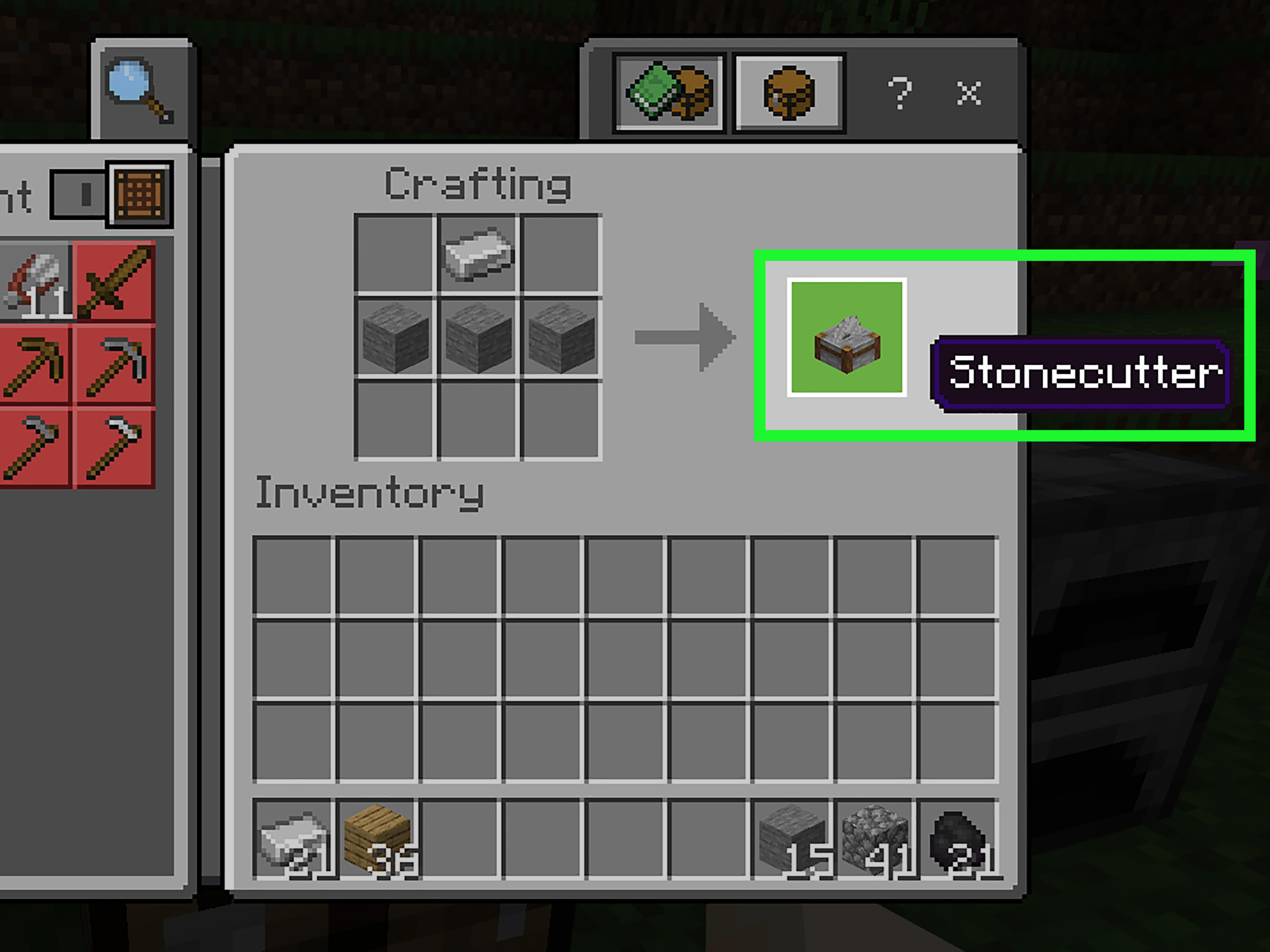
Crafting a Stonecutter in Minecraft is a straightforward process, requiring only a few readily available materials once you've progressed beyond the very early game. The most crucial component of the Stonecutter Recipe is a single iron ingot and three blocks of stone. Here’s everything you'll need and how to put it all together:
Requirements to Craft a Stonecutter:
- Minecraft Version 1.14 or Above: Ensure your game is updated to access this feature.
- A Stone Pickaxe (or better): Necessary for mining cobblestone efficiently.
- A Crafting Table: The fundamental workstation for combining most items.
- A Furnace: Used to smelt cobblestone into smooth stone.
- Fuel: Any burnable item like coal, charcoal, wood, or a lava bucket for the furnace.
- 1 Iron Ingot: Obtained by smelting iron ore.
- 3 Stone Blocks: Made by smelting cobblestone.
Step-by-Step Crafting Instructions:
- Gather Cobblestone: Start by mining any stone blocks you find. This will yield cobblestone. You’ll need at least three pieces, but gathering more is always a good idea for future projects.
- Acquire Iron Ore: Venture into caves or explore mountainsides to find iron ore, which appears as grey blocks with orange specks. You’ll need at least one block of iron ore.
- Craft a Furnace: If you don't already have one, place 8 cobblestone blocks in a crafting table, filling all slots except the very center.
- Smelt Iron Ore into Iron Ingot: Place your iron ore in the top slot of the furnace and your chosen fuel in the bottom slot. Wait for it to smelt into an iron ingot.
- Smelt Cobblestone into Stone: Use your furnace again. Place 3 (or more) cobblestone blocks in the top slot and fuel in the bottom. This will convert the rough cobblestone into smooth, grey stone blocks. This 'stone' is the specific material required for the Stonecutter.
- Craft the Stonecutter: Once you have 1 iron ingot and 3 stone blocks, open your crafting table. Place the iron ingot in the center-top slot, and then place the three stone blocks directly below it, filling the three bottom-most slots of the 3x3 grid.
Voila! You've successfully crafted a Stonecutter. Now you can place it anywhere convenient in your base and begin your efficient stone construction.
Unleashing Your Creativity: Practical Uses and Efficiency Tips
With your Stonecutter proudly placed, it's time to put it to work. Its interface is incredibly simple: place a compatible stone block in the input slot, and a list of all its possible conversions will appear. Simply select the desired output, and it will be instantly crafted, consuming only one input block regardless of the complexity of the output. This 1:1 conversion ratio for most variants is its most significant advantage over a crafting table, saving you valuable time and resources.
Maximizing Your Stonecutter:
- Cost-Effective Building: Always use the Stonecutter for crafting stone slabs, stairs, and walls. For example, a single stone block yields one stone stair or two stone slabs, whereas a crafting table would require multiple blocks to achieve the same quantity, resulting in leftover waste or requiring more raw material.
- Detailed Architectural Elements: Easily create intricate designs using chiseled blocks, polished variants, or detailed walls without complex crafting table setups. This precision is invaluable for builders aiming for aesthetic perfection.
- Resource Management: The Stonecutter significantly reduces the amount of mining you need to do for large-scale stone projects. By maximizing each block, you spend less time gathering and more time building.
- Portability: Like a crafting table or furnace, a Stonecutter can be easily broken and picked up with any pickaxe. This makes it highly portable, allowing you to take it on building expeditions or move it between different construction sites within your base. You only truly need one, though having multiple in separate bases can be a convenience.
- Villager Professions: The Stonecutter also serves as a job site block for unemployed villagers, turning them into Stone Masons. Stone Masons offer valuable trades, including various stone blocks for emeralds, and sometimes even emeralds for specific stone types, adding another layer of utility to the block.
Stonecutters Beyond Minecraft: A Glimpse at Valheim's Counterpart
While this article focuses on the Minecraft Stonecutter, it's worth noting that similar concepts exist in other popular survival games, demonstrating the universal need for specialized crafting tools. For instance, in the Viking-themed world of Valheim, a Stonecutter also serves as a crucial workstation for constructing stone structures like hearths, paved roads, and formidable stone walls. Its Valheim Stonecutter Recipe, however, is quite different, requiring 10 Wood, 2 Iron, and 4 Stone, and its blueprint is unlocked upon acquiring an Iron Ingot.
In Valheim, the Stonecutter isn't just for building aesthetic structures; it's also essential for crafting practical items like Sharpening Stones, which are necessary for forging powerful weapons and tools, and Wisp Fountains, crucial for navigating the treacherous Mistlands. This parallel highlights how specialized tools, even with different recipes and purposes, are integral to progression and creativity across diverse survival games, each tailored to its unique world and challenges.
Conclusion
The Minecraft Stonecutter, though often overlooked, stands as a testament to efficient design and smart building. Its straightforward Stonecutter Recipe belies its immense utility, providing an accessible pathway to advanced stone construction. By embracing this powerful block, players can transform their building experience, saving valuable resources, enhancing precision, and unlocking new levels of architectural creativity. So, next time you set out to build, remember the Stonecutter – your essential companion for crafting magnificent and cost-effective stone structures.